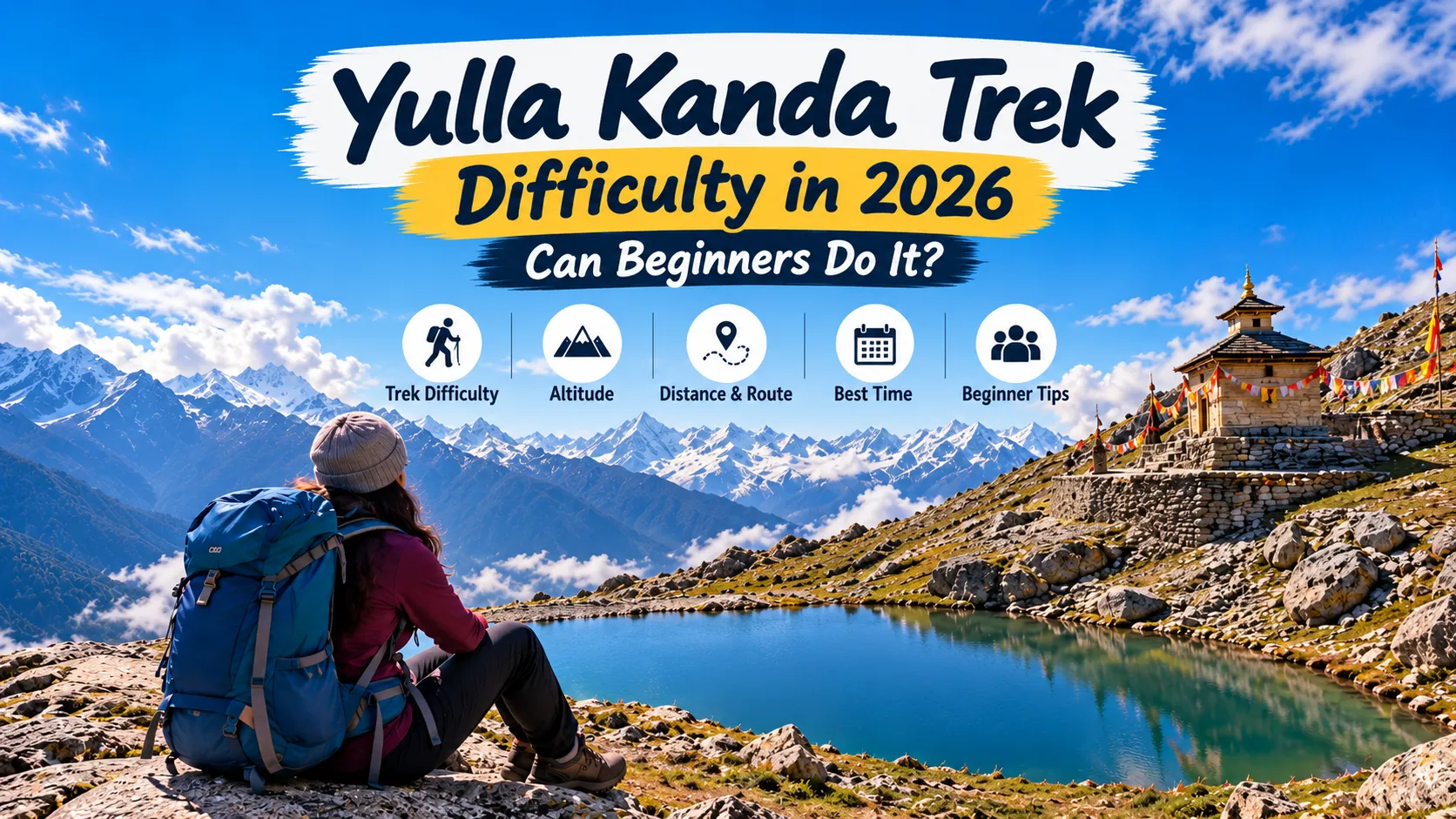
Yulla Kanda Trek Difficulty 2026: Can Beginners Complete It?
By TANUJ DHIMAN
Travel Writer
Planning the Yulla Kanda Trek in 2026? Discover its difficulty level, altitude, trekking distance, best time to visit, and essential fitness tips. Find out whether beginners can safely enjoy this breathtaking Himalayan adventure in Kinnaur, Himachal Pradesh.
The Yulla Kanda Trek is one of Kinnaur's most rewarding high-altitude adventures. With beautiful forest trails, open Himalayan meadows, and a sacred lake beside a Lord Krishna temple, the journey offers much more than an ordinary mountain hike.
But before planning your adventure, there's one important question: How difficult is the Yulla Kanda Trek, and can a beginner actually complete it?
The short answer is yes. However, you should not confuse a beginner-friendly route with an effortless trek.
Yulla Kanda takes you to approximately 3,895 metres above sea level. The climb involves long uphill sections, changing mountain weather, and thinner air. Even someone who regularly exercises may find the final stretch more demanding than expected.
This guide explains the Yulla Kanda trek difficulty in 2026, the challenges along the route, how fit you need to be, and how to prepare for your first trekking experience in Kinnaur.
Quick Answer: Is Yulla Kanda Trek Suitable for Beginners?
Yes, the Yulla Kanda Trek is suitable for physically prepared beginners, especially when undertaken in favourable weather with experienced local guidance.
Although Himachal Pradesh's government trekking directory labels Yulla Trek as easy, its physical demands can feel moderate for someone without previous mountain trekking experience.
The biggest challenges are not technical climbing. They are sustained uphill walking, high-altitude exposure, unpredictable weather, and the long descent.
You don't need professional mountaineering skills or specialised climbing equipment under normal snow-free conditions. But you should be comfortable walking for several hours and have enough stamina to complete the return journey.
Our recommendation: If this is your first Himalayan trek, prepare for at least four weeks, avoid rushing the itinerary, and choose a guided trekking experience.
Yulla Kanda Trek Difficulty: Essential Information
| Trek details | Information |
|---|---|
| Trek location | Kinnaur, Himachal Pradesh |
| Starting point | Yulla Khas village |
| Practical difficulty for beginners | Moderate |
| Lake altitude | Approximately 3,895 metres |
| Trek distance | Roughly 10–14 km one way, route-dependent |
| Trek duration | Usually planned across 2–3 days |
| Trail conditions | Forest paths, meadows, steep and rocky sections |
| Technical climbing | Generally not required on a snow-free route |
| Best season | Late May–June and September–early October, conditions permitting |
| Beginner suitability | Yes, with fitness and acclimatisation |
These are planning estimates rather than fixed route measurements. Different operators report different trekking distances and elevations, depending on their selected trailhead and itinerary.
How Difficult Is the Yulla Kanda Trek in Reality?
Physical Difficulty Versus Technical Difficulty
One reason trekkers get confused about Yulla Kanda is that trekking difficulty can mean two different things.
Technical difficulty involves climbing steep rock faces, using ropes, crossing difficult terrain, or requiring specialised mountaineering skills.
Physical difficulty is about the effort your body needs to complete the journey.
Yulla Kanda is generally non-technical during suitable snow-free conditions. However, physically, the climb can be demanding.
You may spend hours walking uphill, carrying a backpack, and negotiating uneven surfaces. Your pace will often slow as you approach the higher sections.
That's why a trek classified as easy by one source may feel moderately difficult to a first-time visitor.
Why Altitude Makes the Trek Harder
The lake is commonly reported at approximately 3,895 metres, placing it at a significant altitude for recreational trekking.
As altitude increases, atmospheric pressure decreases, reducing the oxygen available to your body.
You may notice that you breathe faster, feel tired more easily, or need additional breaks even on slopes that would feel manageable at lower elevations.
This is particularly important for travellers arriving from lower-altitude cities such as Delhi, Chandigarh, or Mumbai.
Being physically fit helps you handle the trail, but it does not make you immune to altitude sickness.
Can Someone With No Trekking Experience Complete Yulla Kanda?
Who Can Attempt the Trek?
You don't necessarily need to have completed another Himalayan trek before attempting Yulla Kanda.
A first-time trekker may be ready if they walk regularly, have reasonable cardiovascular endurance, are comfortable climbing hills or stairs, and can maintain a steady pace on uneven ground.
Mental preparation also matters.
Mountain trekking is not about walking as quickly as possible. It requires patience, consistent movement, and a willingness to adjust your plans when conditions change.
Beginners who pace themselves usually have a more enjoyable experience than those who attempt to keep up with faster trekkers.
Who Should Prepare More Before Attempting It?
If most of your day involves sitting and you rarely walk long distances, Yulla Kanda should not be your first major physical activity in several months.
Similarly, people with persistent knee pain, difficulty walking uphill, or low stamina should build their fitness before planning the trek.
Travellers with relevant heart, lung, or other medical conditions should seek advice from a healthcare professional familiar with high-altitude travel.
A useful self-check: Can you comfortably complete an 8–10 km walk and manage a sustained uphill section without becoming excessively exhausted?
This is not a medical test or guarantee of trekking readiness, but it can help you understand your current endurance.
Which Parts of the Yulla Kanda Trek Are the Most Difficult?
1. The Initial Climb From Yulla Khas
The trek usually begins at Yulla Khas village.
The early walking sections follow village paths before continuing into forested mountain terrain.
Although the surroundings are pleasant, the uphill walking begins early enough that beginners may feel the effort within the initial part of the trek.
The best approach is to start slowly.
Avoid using too much energy during the opening kilometres, even if you feel fresh and confident.
2. Forest Trails and Uneven Ground
As you move farther from Yulla Khas, the route continues through forested slopes.
These sections can be relatively comfortable in dry weather, particularly when the path is clear.
However, exposed roots, loose stones, and wet soil can make walking more demanding.
Rain can change an otherwise manageable path into a slippery trail.
Trekking shoes with reliable grip are particularly useful here.
3. The Upper Meadows and Final Ascent
The upper portion of the trek is often one of the most physically demanding sections.
As the forest gives way to open mountain terrain, the path becomes more exposed and the higher altitude begins to matter.
Trekkers may need to climb steep stretches while managing fatigue from the earlier ascent.
Cold wind, intense sunlight, or a sudden change in visibility can add to the difficulty.
Do not assume that being able to see the lake or temple means you can reach it quickly.
Continue only when you have enough energy, daylight, and suitable weather for the return journey.
4. The Descent Back Towards Yulla Khas
Many beginners spend all their energy focusing on reaching the destination.
But the descent deserves just as much attention.
After hours of climbing, your leg muscles may already be tired. Walking downhill puts additional stress on your knees and requires careful balance, especially on loose stones or muddy surfaces.
Take shorter steps, avoid rushing, and consider trekking poles for additional stability.
A successful trek means reaching your destination and returning safely, not simply reaching the highest point.
How Long Is the Yulla Kanda Trek?
Published route descriptions commonly place the distance from Yulla Khas to the lake at around 10–14 km one way.
The variation largely depends on the trailhead, local route, and location of intermediate campsites.
This means the full return journey may cover approximately 20–28 km.
For a first-time trekker, that's a substantial amount of mountain walking.
Unlike walking the same distance on a flat road, Himalayan trails involve elevation changes, uneven terrain, and periods of slower movement.
It's better to use the distance as a planning estimate rather than calculate an exact finishing time from it.
If you're considering a Himachal Pradesh adventure holiday package that includes Yulla Kanda, ask for the exact walking distance, expected daily pace, and backup arrangements before booking.
Can Yulla Kanda Be Completed in One Day?
Some experienced and properly acclimatised hikers may attempt the entire route in a single day.
However, a one-day ascent and descent is not the recommended starting point for beginners.
It combines a long uphill climb, altitude exposure, and a tiring descent within a limited daylight window.
A multi-day plan with an authorised camping arrangement can make the experience more manageable.
How Many Days Should Beginners Plan for Yulla Kanda Trek?
For most first-time trekkers, a carefully planned itinerary spread over multiple days is preferable.
If you're travelling with friends through a Himachal Pradesh group holiday package, choose an itinerary that gives slower walkers enough time to rest and acclimatise instead of rushing the entire group.
Day 1: Reach Yulla Khas and Prepare
Travel towards Kinnaur through Shimla, Rampur, and the Tapri area before continuing towards Yulla Khas.
The journey itself may be tiring because of winding mountain roads and changing conditions.
Once you arrive, meet your local guide, confirm the trail conditions, organise your equipment, and rest.
Avoid beginning a major climb immediately after a long road journey.
Start after reviewing the latest local weather and route information.
The trail gradually takes you away from the village and through the surrounding forest and mountain landscape.
Walk at a pace suitable for the least experienced member of your group.
If camping forms part of your itinerary, use a campsite currently permitted by local authorities.
Do not assume camping is allowed directly beside the lake or temple.
Day 3: Visit the Lake and Descend
Depending on your campsite location and the planned route, complete the remaining climb towards Yulla Kanda Lake and Krishna Temple.
Allow time for rest, photography, and appreciating the mountain surroundings, but do not delay your return unnecessarily.
Begin descending with sufficient daylight remaining.
The precise division of walking between days depends on the operator, campsite, fitness of the group, and current conditions. Some itineraries visit the lake on the second day and use the third day primarily for descent.
How Fit Do You Need to Be for Yulla Kanda Trek?
You don't need to be a professional athlete.
However, you should have enough stamina to walk uphill for extended periods without becoming completely exhausted.
Three fitness components are particularly valuable.
Cardiovascular Endurance
Your heart and lungs need to support consistent physical movement over several hours.
Brisk walking, cycling, swimming, and light jogging can help build endurance.
Leg Strength and Balance
Mountain trails use your thighs, calves, glutes, and stabilising muscles.
Stair climbing, controlled lunges, squats, and uphill walking can improve strength and control.
Descending practice is important because tired legs often make downhill sections harder than expected.
Backpack Comfort
Carrying even a relatively light backpack feels different during a long mountain climb.
Practise walking with the equipment you expect to carry during the trek.
Also wear your trekking shoes before departure rather than using them for the first time on the trail.
Four-Week Fitness Preparation Plan for Beginners
If you are reasonably healthy but new to trekking, a four-week preparation routine is a useful starting point.
Week 1: Build a Walking Habit
Begin with 30–45 minutes of brisk walking on most days.
Include gentle stair climbing and focus on consistency.
Week 2: Improve Uphill Stamina
Increase walking sessions towards 45–60 minutes.
Introduce longer stair-climbing sessions or gentle uphill walks.
Avoid pushing yourself to exhaustion.
Week 3: Practise Longer Walks
Attempt one longer walk of approximately 8–10 km on suitable terrain.
Use the shoes and light backpack you intend to carry.
Add controlled downhill walking to your routine.
Week 4: Prepare for Trekking Conditions
Practise a sustained hill walk at a manageable pace.
Continue endurance exercises while allowing adequate recovery.
Reduce strenuous exercise immediately before departure so you begin the trek feeling rested.
This plan is general guidance, not a guaranteed preparation period. Your existing fitness, health, and the planned itinerary may require more time.
Is Altitude Sickness a Serious Concern on Yulla Kanda?
Yes. Altitude sickness is one of the most important safety considerations for this trek.
Acute mountain sickness can affect anyone who ascends too rapidly, including experienced and physically fit trekkers.
Possible symptoms include headache, nausea, dizziness, unusual fatigue, and loss of appetite.
Do not ignore symptoms simply because you are close to your destination.
The CDC recommends gradual acclimatisation and avoiding further ascent while experiencing altitude illness symptoms.
If symptoms worsen, descend to a lower altitude and obtain appropriate medical assistance.
Severe breathlessness at rest, confusion, or difficulty walking normally can indicate a medical emergency requiring urgent descent and treatment.
Build additional time into your itinerary so your body has an opportunity to adjust.
Avoid rushing directly from low-altitude cities into demanding high-altitude activity.
Maintain a comfortable walking pace, eat regularly, and drink according to your needs.
Adequate hydration supports general wellbeing but does not independently prevent altitude sickness.
If you have a history of altitude illness or an underlying medical condition, discuss your plans with a qualified doctor before departure.
What Is the Best Time for Beginners to Attempt Yulla Kanda in 2026?
The season can dramatically change how difficult the trek feels.
May and June: Pleasant Lower Trails With Possible Snow
Late spring and early summer often bring improving access and greener landscapes.
However, snow may remain along higher sections even when the lower trail is clear.
Beginners should verify the conditions near the lake before confirming their departure.
July and August: Additional Monsoon Challenges
The monsoon can make forest paths muddy, streams difficult to cross, and steep descents slippery.
Landslides and road disruptions are additional concerns in Kinnaur.
These months require especially careful planning and are generally less preferable for first-time trekkers.
September and Early October: Often a Better Choice
Post-monsoon conditions frequently provide clearer views and comparatively drier trekking routes.
September and early October are therefore often attractive periods for beginner groups.
However, temperatures can drop significantly at higher elevations, particularly overnight. Couples combining the trek with a Himachal Pradesh couples holiday package should make sure both travellers are prepared for cold conditions and sustained uphill walking.
Late October to Winter: Greater Difficulty
Snow, ice, colder temperatures, and uncertain access can significantly increase the challenge.
A trail suitable for a beginner in dry conditions may become unsuitable after snowfall.
Late-season attempts should depend entirely on local route assessments rather than calendar dates or advertised departures.
What Should Beginners Carry for the Yulla Kanda Trek?
Packing correctly makes a noticeable difference to comfort and safety.
Your most important items are:
Footwear: Well-fitted trekking shoes with dependable grip.
Clothing: Breathable base layers, an insulating jacket, gloves, a warm cap, and waterproof protection.
Daypack: A comfortable backpack suited to your itinerary.
Food and water: Sufficient drinking water, a treatment method if refilling, and easy-to-carry energy snacks.
Safety equipment: A headlamp, basic first-aid kit, personal medicines, and a whistle.
Navigation: Downloaded offline maps, a charged phone, and a power bank.
Sun protection: Sunglasses, sunscreen, and a protective cap.
Other essentials: Identification, cash, and a waterproof bag for waste.
Carry what you need, but avoid filling your backpack with unnecessary items.
A lighter bag can make the climb considerably more comfortable.
Should Beginners Choose a Guided Yulla Kanda Trek?
For most first-time visitors, choosing a local guide or an organised trekking group is a sensible decision.
Guides familiar with the area can assist with route navigation, assess changing weather conditions, explain local restrictions, and help establish a realistic turnaround time.
Organised arrangements can also simplify transport, accommodation, food, and camping logistics.
However, not every trekking package includes the same services.
Before booking, confirm the number of walking days, campsite location, accommodation type, group size, included meals, equipment arrangements, and emergency procedures.
A guided trip is not a guarantee against altitude illness or bad weather, but responsible support can improve the overall experience.
Travellers arranging a Himachal Pradesh luxury holiday package can plan more comfortable stays and private transfers before or after the trek, but they should expect basic facilities along the mountain route itself.
Common Mistakes First-Time Yulla Kanda Trekkers Should Avoid
One of the biggest mistakes is assuming that a trek labelled easy requires no preparation.
Another is planning an overly ambitious itinerary after a tiring road journey.
Some beginners also underestimate the descent, carry an unnecessarily heavy backpack, or attempt the upper trail in unsuitable footwear.
Others continue climbing despite worsening headaches, dizziness, or exhaustion because they don't want to disappoint their group.
Avoid letting the pressure of reaching the temple override basic safety decisions.
The mountains will still be there for another attempt.
Is Yulla Kanda Worth It for a First Himalayan Trek?
For someone looking for a combination of adventure, mountain landscapes, and spiritual significance, Yulla Kanda can be an excellent choice.
The trek offers a gradual transition from village surroundings and forest paths to open alpine terrain.
Its most memorable attraction is the sacred lake and Krishna temple, surrounded by the dramatic landscapes of Kinnaur.
However, Yulla Kanda is not necessarily the easiest introduction to Himalayan trekking.
Travellers who want a relaxed mountain holiday or have very limited walking experience may be more comfortable beginning with a shorter, lower-altitude hike.
For those willing to prepare, Yulla Kanda can provide a meaningful introduction to high-altitude trekking.
For newlyweds exploring a Himachal Pradesh honeymoon holiday package, the trek can be a memorable optional experience if both partners enjoy physical adventure. Otherwise, relaxed sightseeing around Kinnaur may be a better fit for the trip.
Final Verdict: Can Beginners Do the Yulla Kanda Trek in 2026?
Yes, beginners can attempt the Yulla Kanda Trek, but preparation makes a major difference.
The normal snow-free route is not typically a technical climbing expedition, yet the combination of altitude, long uphill walking, and a demanding descent should not be underestimated.
If you are reasonably fit, prepare for several weeks, choose an appropriate season, and follow a properly paced itinerary, Yulla Kanda can be a rewarding first Himalayan trekking experience.
If you are not confident about your endurance or have never walked long distances in the mountains, spend more time preparing or consider an easier trek first.
The best trekking experience isn't defined only by reaching the lake. It's about enjoying the journey and returning safely.
Planning Your First Yulla Kanda Trek?
Explore a guided trekking experience in Kinnaur with Flyocat.
Share your travel dates, group size, and previous trekking experience to discuss a suitable itinerary, local guidance, and the arrangements needed for a comfortable mountain adventure.
Enquire About Your Yulla Kanda Trek
Frequently Asked Questions About Yulla Kanda Trek Difficulty
Is Yulla Kanda Trek easy or moderate?
The Himachal Pradesh government trekking directory lists Yulla Trek as easy. However, due to the altitude, prolonged uphill sections, and long descent, beginners should prepare for a physically moderate trek in typical snow-free conditions.
Can a beginner complete Yulla Kanda without previous trekking experience?
Yes, a reasonably fit beginner can attempt the trek with preparation, proper acclimatisation, suitable weather, and local guidance.
How difficult is the final climb to Yulla Kanda Lake?
The higher sections can be steep and physically tiring, particularly because trekkers have already gained altitude and walked for several hours.
How many kilometres is the Yulla Kanda Trek?
Published route estimates vary, commonly falling around 10–14 km one way from the Yulla Khas area. The full return distance depends on the trail and campsite location.
What is the altitude of Yulla Kanda Lake?
The lake and Krishna temple are commonly reported at approximately 3,895 metres above sea level. Some official trekking listings show a different figure for the wider Yulla route.
How many days should beginners plan?
A multi-day itinerary is preferable. Allow approximately two to three trekking days depending on route and campsite arrangements, plus appropriate travel and acclimatisation time.
Can I complete Yulla Kanda Trek in one day?
Some experienced and acclimatised hikers may attempt it, but a one-day ascent and descent is generally not recommended for unprepared beginners.
Is altitude sickness common on Yulla Kanda Trek?
There is a meaningful risk of altitude sickness because of the elevation. Individual susceptibility varies, and fitness alone cannot prevent it.
Which month is best for beginners?
Late May to June and September to early October are commonly preferred, subject to actual snow, weather, trail, and road conditions.
Is a guide necessary for Yulla Kanda Trek?
A local guide is strongly recommended for first-time trekkers because of remote terrain, uncertain conditions, and navigation considerations. Current local requirements should be checked before departure.
Is Yulla Kanda Trek safe for solo beginners?
Solo trekking adds navigation and emergency-response risks. First-time trekkers are better advised to join a group or arrange local guidance.
Does Yulla Kanda Trek require technical climbing skills?
Under normal snow-free conditions, the standard walking route generally doesn't require ropes or technical climbing equipment. Snow and ice can change that assessment significantly.
Can overweight beginners attempt Yulla Kanda Trek?
Body weight alone does not determine trekking ability. Overall endurance, mobility, medical considerations, and ability to manage prolonged uphill and downhill walking are more relevant.
Is Yulla Kanda Trek worth doing in 2026?
Yes, for travellers seeking a scenic high-altitude adventure with cultural and spiritual significance. It is best enjoyed with realistic expectations, adequate preparation, and respect for current local conditions.
Plan with Flyocat
Inspired by this travel guide?
Tell our travel specialists your dates and preferences — we’ll craft a tailored itinerary with handpicked stays and transfers.